Abstract Rugs: How Seraj Rugs Turns a Painting Into Wool
Abstract Rugs: How Seraj Rugs Turns a Painting Into Wool
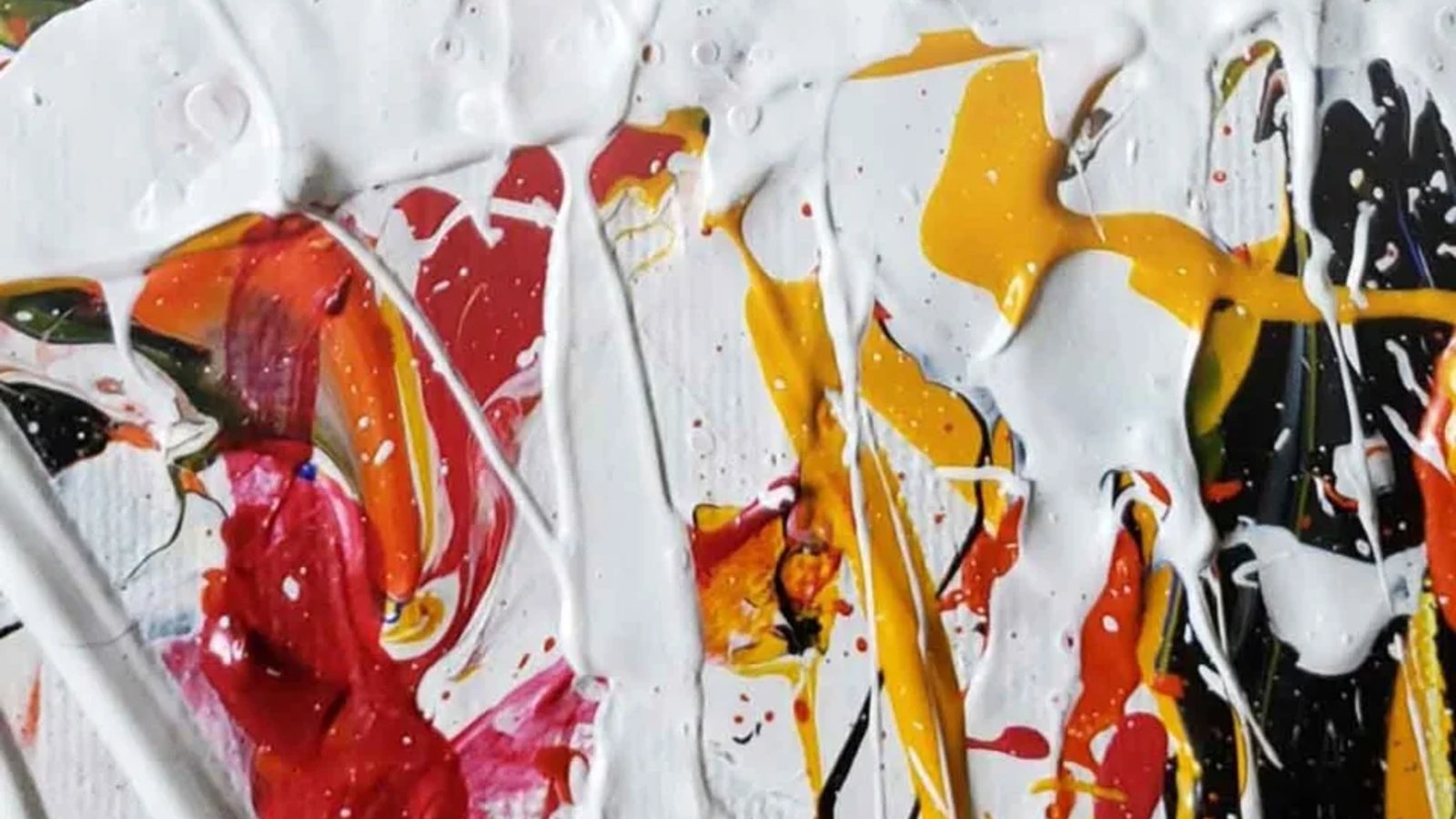
Abstract rugs are what happens when a painting stops hanging on a wall and starts living on the floor. The appeal is the same freedom that drew people to abstract expressionism: color, gesture, and movement with no pattern to obey. As a manufacturer with our own looms in Nepal and India, we make abstract rugs the direct way, by translating a painting, a render, or a loose brief into knots and tufts of dyed wool. This guide walks through how abstract rugs move from image to wool, why the medium changes the artwork, and what to send us when you want one woven to your own design. Good abstract rugs are not printed; they are built thread by thread, which is why the custom route gives you the result a stock range never can.


In short
- Abstract rugs translate the color and gesture of a painting into hand-woven wool, with no repeating pattern to follow.
- The real work is the strike-off: matching brushstrokes, washes, and edges in dyed yarn rather than ink.
- Hand-knotted suits fine detail and painterly blends; hand-tufted suits bold fields and faster lead times.
- We weave from a painting, a photo, or a render, so the design can be yours rather than off a shelf.

Where to go next
Browse the constructions behind most abstract work, or start a custom piece from your own image.
Seraj Custom
Send a painting, a photo, or a render and we will weave to it, starting with a strike-off.
Hand-knotted
The finer grid for painterly blends, feathered edges, and watercolor transitions.
Hand-tufted
Bold fields and large gestures at a faster lead time for big abstract designs.
What makes a rug read as abstract
An abstract rug carries no scene and no repeat. There is no border to resolve, no central medallion, no motif marching across the field. What is left is pure composition: a color against another color, a soft wash meeting a hard edge, a gesture that runs off one side and does not come back. That is also what defines abstract expressionism as a movement, which is why so many of these designs trace back to painters who worked that way.
Because there is nowhere for the eye to rest on a familiar symbol, the craft has to carry the whole effect. A weak weave shows immediately in an abstract field; there is no busy pattern to hide behind. The flip side is that a well-made abstract piece feels alive in a room in a way a tidy traditional design rarely does.
From canvas to loom: making an abstract art rug
Turning a painting into an abstract art rug is a problem of translation, not copying. Paint is a continuous surface; a rug is a grid of knots or tufts. The first job is to read the artwork for what matters: the dominant color moves, the direction of the gesture, the places where the artist let one color bleed into another, and the places where they kept a crisp line.
We map those onto a weave plan. A hand-knotted construction gives a finer grid, so it can hold painterly blends, feathered edges, and the kind of color transition a watercolor leaves behind. A hand-tufted construction lays down color faster and in broader strokes, which suits bold fields and large-scale gestures. Neither is better; they answer different paintings. Our weavers then dye yarn to the palette, because a believable abstract art rug depends far more on getting the exact colors than on any single technical trick.
Why wool suits abstract expressionism
Wool is a forgiving medium for gesture. It takes dye deeply and holds subtle differences in tone, so a field that looks flat from across the room reveals movement up close, the same way an oil surface does. The pile also catches light at an angle, which means a single gray can read as three or four grays as you walk past it. That is exactly the restless quality abstract expressionism was after.
Texture as a second layer
Beyond color, we can vary pile height and mix cut and loop so a brushstroke sits slightly proud of the ground. A gesture you could only imply in a flat print becomes something you can feel underfoot. A hand-woven piece carries what a print cannot: the artwork gains a physical layer the original painting never had.
Artist rugs and the question of the edition
When a painter or studio wants their own work on the floor, the conversation turns to artist rugs: pieces made in collaboration with the person who holds the image. We can weave a single commissioned piece or a small, numbered run, and we keep the strike-off and the weave plan on file so a later batch matches the first. For partners building a collection, that repeatability is the point; artist rugs only work as a line if piece five looks like piece one.
We do not hold rights to anyone's art, and we do not reproduce a painting we were not asked to. The image comes from you or from the artist you represent, and we translate it. That keeps the credit, and the control, where it belongs.
Have a painting in mind?
Contact us
Watercolor rugs and soft-edged designs
Watercolor rugs are a favorite entry point into the abstract category because the look is gentle and easy to live with. The hallmark is the bleed: colors that fade into one another with no hard boundary, pale grounds broken by a few deeper pools of pigment. Rendering that in yarn is a dyeing exercise as much as a weaving one, since the effect lives in the gradual shift from one tone to the next.
For watercolor rugs we usually lean hand-knotted, because the finer grid lets a color dissolve over more rows and keeps the transition smooth rather than stepped. The result reads as a wash from a few feet away and resolves into careful graded knotting up close.
Ordering custom rugs from a photo or a painting
The practical route to a one-of-a-kind piece is custom rugs from a photo, a scan of a painting, or a design render. Here is what helps us most:
- The highest-resolution image you have, flat and evenly lit, so the colors are true to the original.
- A note on which parts matter most: the exact palette, a particular edge, the overall mood, or a specific gesture.
- The finished size, shape, and the construction you are leaning toward, or let us recommend one from the image.
From there we produce a strike-off, a woven sample of a section, so you can judge the color and the hand before we run the full piece. Nothing goes on the loom at size until that sample is right. Ordering custom rugs from a photo this way removes the guesswork that comes with buying a fixed design and hoping the colors match the room.
Made on our own looms
We are a manufacturer, not a reseller, which is what makes this work. With roughly 200 looms and around 500 weavers across Nepal and India, we can take on a single commissioned piece or a full custom program and keep both to the same standard. That scale is also why strike-offs, color matching, and repeatable editions are a normal part of how we operate rather than a special request.
Frequently asked questions
What are abstract rugs?+
Can you make an abstract art rug from my own painting?+
What is the difference between hand-knotted and hand-tufted for abstract designs?+
Do you make watercolor rugs with soft, blended colors?+
Can I order custom rugs from a photo?+
Do you make artist rugs or limited editions?+
Related guides and pages
Have a painting in mind?
Send us the image, the size, and the mood you are after. We will weave a strike-off first, so you see the color and the hand before the full piece goes on the loom.
Contact us