Low Pile Rugs vs High Pile: How 6 mm and 15 mm Change a Room
Low Pile Rugs vs High Pile: How 6 mm and 15 mm Change a Room

In short
- Pile height is the thickness of a rug's surface yarn, measured in millimeters: low pile sits around 6 mm, high pile around 15 mm or more.
- Low pile rugs are easier to vacuum, let doors and chairs clear, and hold up in busy rooms and under dining tables.
- High pile rugs feel soft and warm underfoot and read as cozy, but they shed more and show tracks in heavy lanes.
- We weave both pile heights to order on our own looms, so pile is a spec you set, not a constraint you accept.

What rug pile height actually means
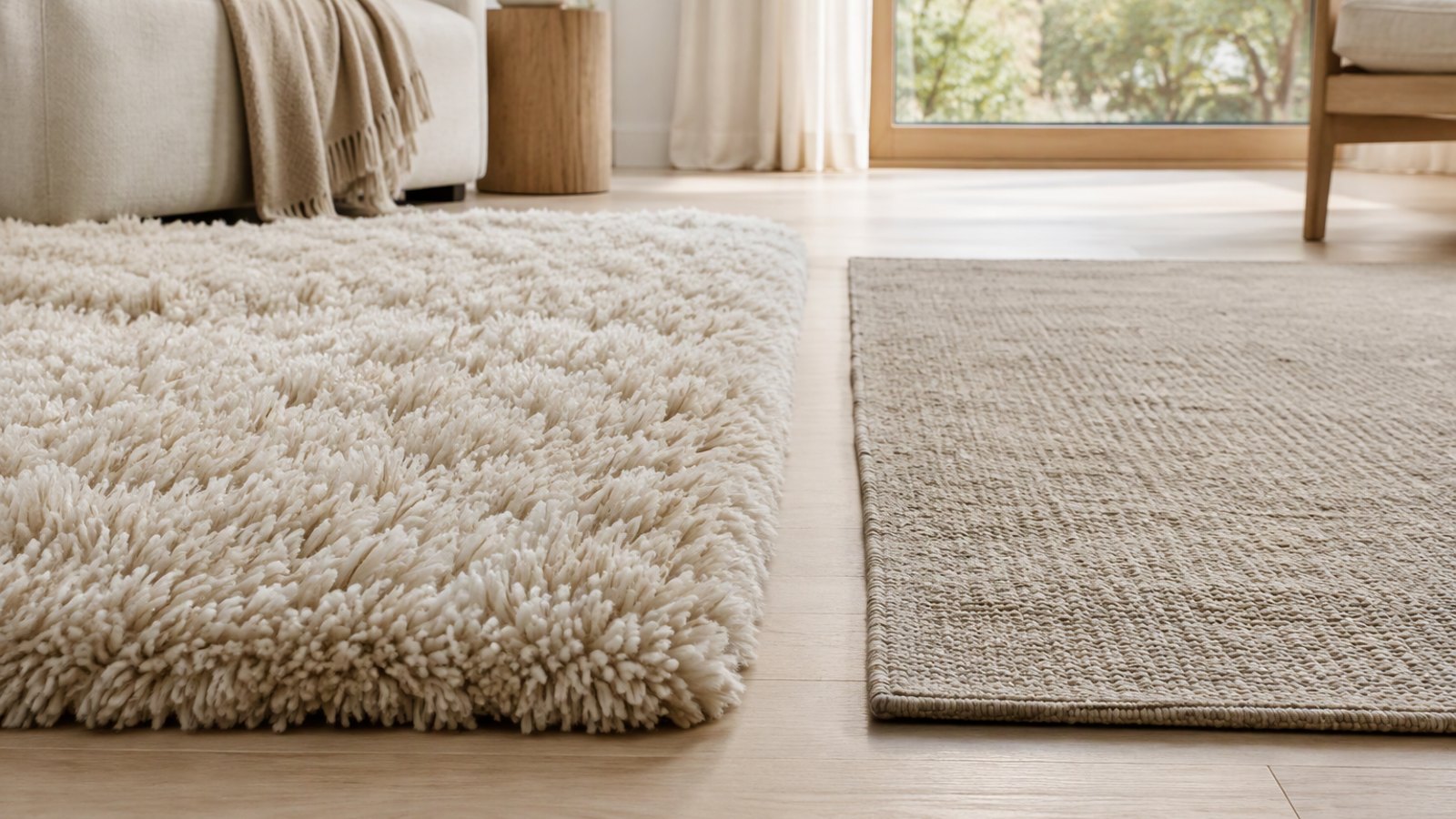
Rug pile height is the thickness of the yarn that stands up from the rug's backing, measured from the base to the top of the tuft. A flatweave such as a kilim or dhurrie has almost no pile; a dense hand-knotted rug runs low; a shag or deep hand-tufted piece runs high. Most of what people call a low pile rug lands near 6 mm, and most high pile rugs land near 15 mm, though both vary by construction and yarn.
The number sounds small, but it drives how a rug behaves day to day: how it cleans, how it sits against furniture, how it feels when you walk on it, and how long it holds its look in a busy room. If you want to see how a near-zero pile compares with a woven surface, our guide to kilim, dhurrie and flatweave rugs covers that end of the range, and you can browse constructions across the full collection.
Low pile rugs: how 6 mm behaves in a room
At around 6 mm, low pile rugs read as crisp and tailored. Patterns stay sharp because the yarn is short and tightly set, which is why dense weaves hold fine detail so well. Our hand-knotted rugs sit in this range: close to the floor, firm underfoot, and built to take years of foot traffic without matting.
Practically, a low pile clears door swings, lets dining chairs slide in and out, and gives castors and wheels a stable surface. It vacuums quickly, dries faster after a spill, and tends to show fewer footprints than a deep pile. The trade-off is warmth: a 6 mm surface is less cushioned, so a room that is meant to feel soft and enveloping may want more height.
High pile rugs and plush pile carpet: how 15 mm changes a room
At around 15 mm, high pile rugs change the feel of a floor the moment you step on it. The extra length holds air, so the surface is warmer, softer and quieter, and a deep, plush pile carpet reads as cozy and informal in a way a tight weave never will. Many of our hand-tufted rugs can be built with a taller pile for exactly this reason.
Height has costs. A high pile traps more grit between the fibers, so it needs deeper, slower cleaning. New wool pile sheds for a while before it settles. And in a heavy lane, such as a hallway or the path from a sofa to a door, a tall pile flattens and shows tracks sooner than a low one. High pile belongs where comfort matters more than wear: bedrooms, lounges and reading corners rather than entryways and under dining tables.
Not sure which pile fits the room?
Contact us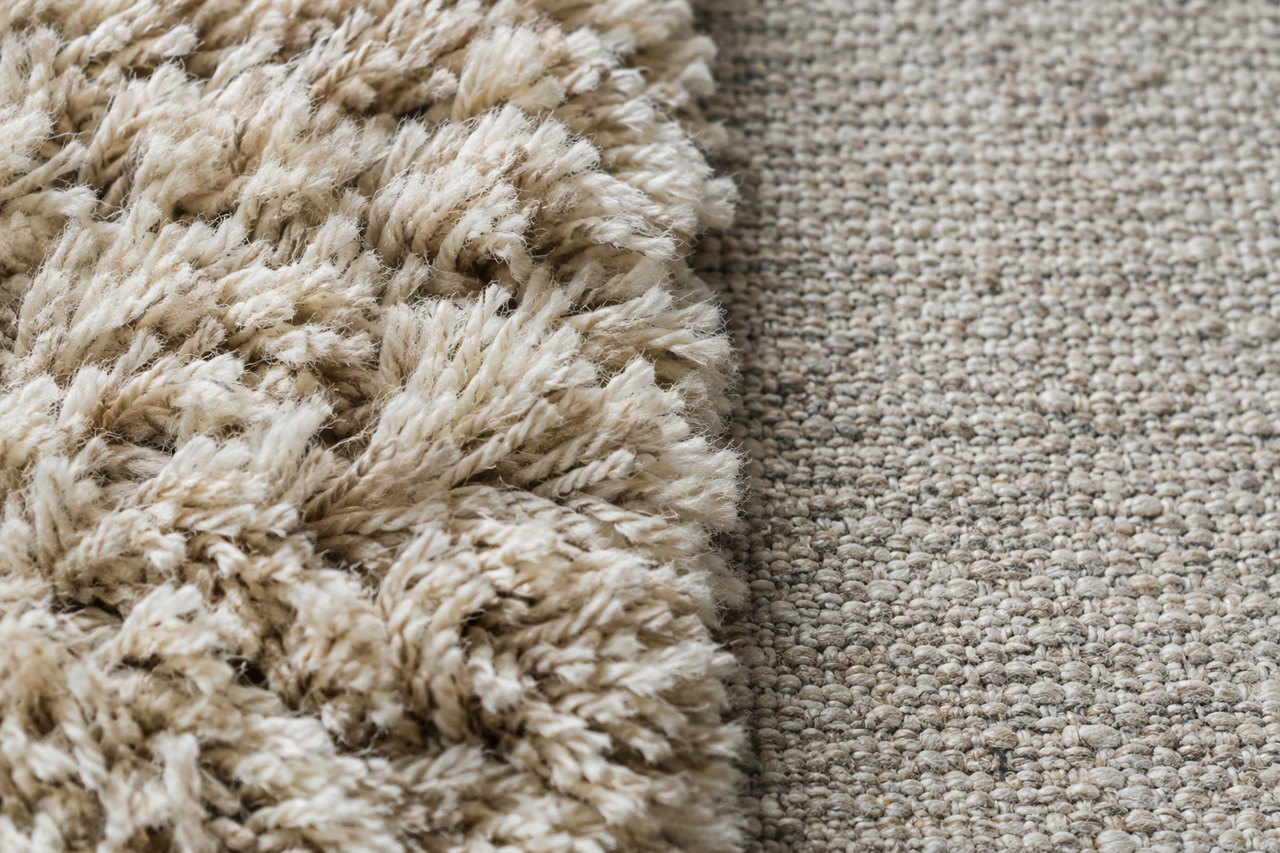
Low pile vs high pile rugs: a side-by-side comparison
The same room can want opposite answers depending on how it is used. This table sets the two pile heights against the factors that usually decide the call.
| Factor | Low pile rugs (around 6 mm) | High pile rugs (around 15 mm) |
|---|---|---|
| Pile height | Short, close to the floor | Tall, deep surface |
| Feel underfoot | Firm, crisp, tailored | Soft, warm, cushioned |
| Best room | Dining rooms, entryways, kitchens, offices, hallways | Bedrooms, lounges, reading corners, nurseries |
| Care | Vacuums fast, dries quickly, shows little dirt | Needs deeper cleaning, sheds at first, holds more grit |
| Traffic | Holds up well in busy, high-traffic lanes | Best in low to moderate traffic; flattens in busy paths |
Neither pile is better in the abstract. The right height is the one that fits how the room is actually used, which is where a maker helps: we can hold a pattern and palette steady and change only the pile to suit each space.
Choosing pile height by room and traffic
Start with how hard the floor works. A dining room, an entry or a kitchen sees chairs, spills and constant feet, so a low pile is the safer call. A bedroom or a lounge is about comfort, so a higher pile earns its place. For open-plan rooms, many of our partners run a low pile in the walking lanes and a higher pile in the seating zone.
Pile height also pairs with size and layering. Getting the footprint right matters as much as the height, so it is worth reading our standard rug sizes guide alongside this one. And if you like the softness of a high pile but need durability underneath, layering a knotted piece over a flatweave gives you both in one floor.
Pile is a spec, not a limit
Because we weave on our own looms, with roughly 200 looms and about 500 weavers across Nepal and India, pile height is something we set to your brief rather than something you accept off a shelf. Tell us the room, the traffic and the feel you want, and we match the construction and pile to it, in your size, pattern and palette.
Trade partners can send a specification and we will map pile height to the whole program, from sampling through production. See how we work through our custom rugs and trade program, or reach us directly to talk through a brief.
Frequently asked questions
What is rug pile height?+
Are low pile rugs better for high traffic?+
What counts as high pile rugs?+
Is a plush pile carpet hard to clean?+
Which pile height is best for a dining room?+
Can you make a rug in a custom pile height?+
Related guides and collections
Not sure which pile fits the room?
Tell us the room, the traffic and the feel you want. We will match the construction and pile height to it and send a capability sheet to start the brief.
Contact us