Rug Samples and Strike-Offs: How Seraj Rugs Gets Color Right
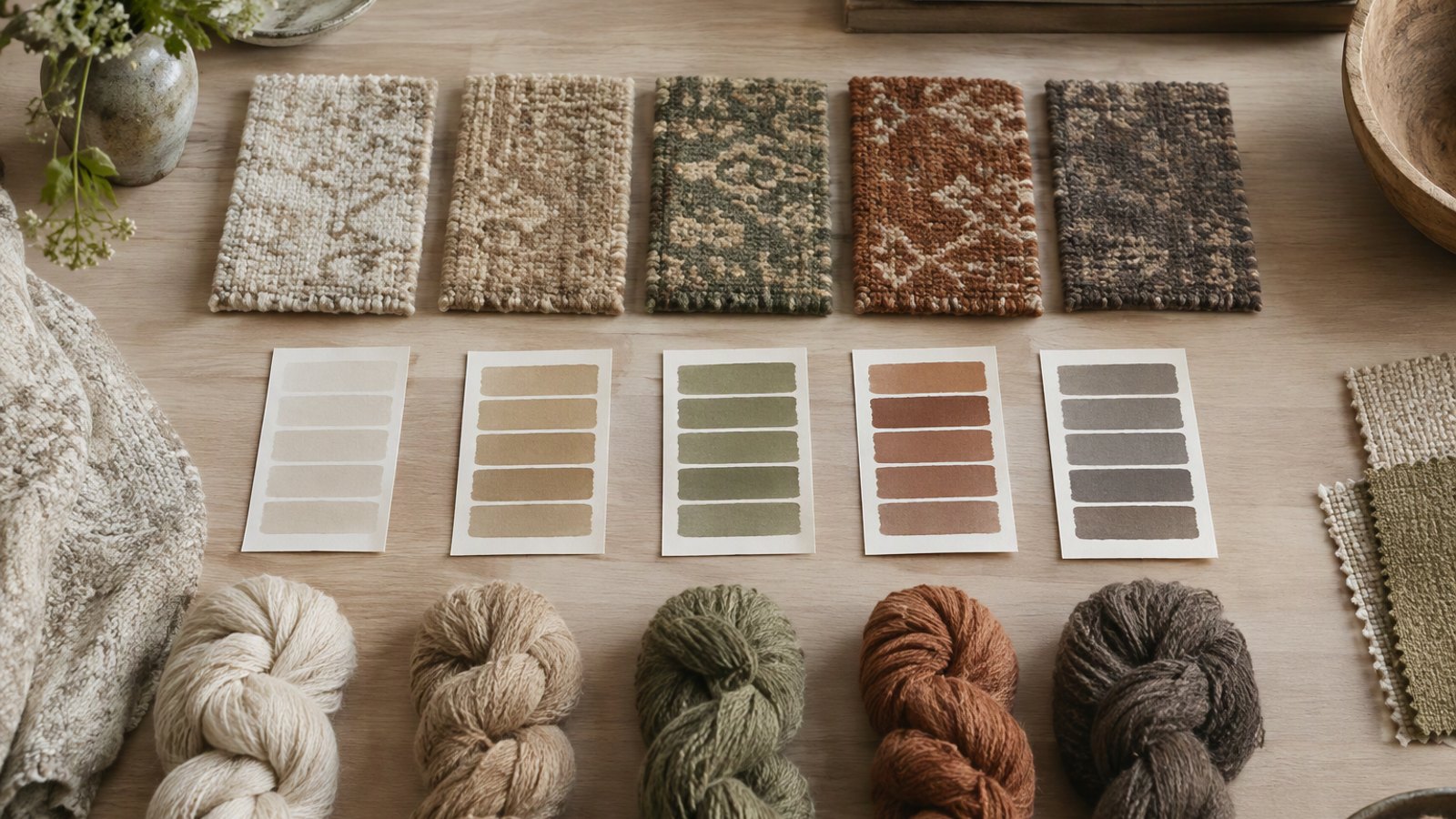
Rug Samples and Strike-Offs: How Seraj Rugs Gets Color Right

In short
- Rug samples let you approve color and construction before weaving starts, not after.
- A lab dip proves a single yarn color; a strike-off proves the pattern, pile and color together at small scale.
- Our color approval promise is simple: full production waits until you sign off the sample.
- We make these on the same looms in Nepal and India that weave the final rug, so the sample is a true preview.

Why rug samples decide the whole order
A rug is a long commitment of yarn, dye and loom time. Once it is on the loom, color is not something you can edit later without starting over. That is why we treat rug samples as the real decision point of a project, not a formality at the end. A screen shows you light; a photograph shows you a camera's guess at light. A physical sample shows you wool and color the way they will actually sit on a floor.
For trade partners working to a scheme, this matters even more. The rug has to agree with paint, stone, timber and fabric that are already chosen, and those readings shift between showroom light and daylight. We would rather send rug samples you can lay next to those materials than ask you to trust a render. When the sample is right, the full rug is predictable. When the sample is skipped, every surprise lands at delivery, which is the most expensive place for one to arrive.
The rug sampling process, step by step
Our rug sampling process is short to describe and careful to run. It usually goes like this:
- Brief and reference. You send a design, a render, a pattern, or a color reference. A physical swatch or a pantone-style reference is ideal, because it removes guesswork about the target color.
- Yarn and dye selection. We match the reference to our wool and dye recipes and decide whether a lab dip is needed before anything larger is made.
- Lab dip or strike-off. We produce the small proof that fits the question being asked, color alone or color plus construction. More on both below.
- Your review. You look at the proof in your own light, against your own materials, and either approve it or mark what needs to change.
- Revision if needed. We adjust the recipe or the weave and send a fresh proof. We repeat this until it is right.
- Sign-off, then production. Only after approval do we commit yarn and loom time to the full rug.
The point of the sequence is that every expensive step sits behind an approval. Nothing large is made on a guess.
What a rug strike off actually is
A rug strike off is a small woven piece, made in the same construction as the planned rug, that proves the design works in real yarn. Think of it as a short section of the actual rug: the knot count, the pile height, the yarn, the colors and the pattern detail are all the real thing, just at a size you can hold. Where a render flattens a design, a strike-off shows how the pile catches light, how two close colors read against each other, and how crisp a line or curve comes out at the chosen knot density.
We make strike-offs on the same looms and with the same weavers who will produce the full order, across our workshops in Nepal and India. That is deliberate. A sample made somewhere else, by someone else, is not a reliable promise about the final rug. A strike-off from the production loom is. If a motif needs a finer knot to hold its shape, or a border color needs to shift half a step, the strike-off is where we find that out together, at small scale, before we commit the full order.
Lock the color before we weave
Contact us
Rug lab dip: matching color before we weave
A rug lab dip is the color-only proof. We dye small hanks or tufts of the actual yarn to the target color and send them to you to check. There is no pattern and no full weave at this stage; the single job of a lab dip is to answer one question, is this the color, before we build anything around it.
Lab dips are useful when color is the main risk. Deep or saturated tones, exact brand colors, and shades that have to sit beside a specific fabric or paint are all good candidates. Dye behaves differently on wool than it does on paper or on a screen, and it can read differently once it is tufted into pile, so we often pair a lab dip with a later strike-off: the lab dip locks the recipe, and the strike-off confirms how that recipe looks once it is actually woven. The table below sets the two side by side.
| Proof | What it shows | When to ask for it |
|---|---|---|
| Lab dip | A single yarn color, dyed to target | When exact color is the main risk |
| Strike off | Color plus pattern, pile and knot detail at small scale | When design and construction need proving together |
| Full sample / header | A larger woven piece or corner of the finished design | Final check before a large or repeat order |
Custom rug samples and the color approval promise
For bespoke work, custom rug samples are the whole basis of trust between us and a partner. You are not buying something off a shelf; you are asking us to weave a design to your spec. So we make the sample first, you approve it, and that approved sample becomes the standard the full rug is measured against. If the delivered rug does not match the signed-off sample, that is on us, not on you.
This is what we mean by a color approval promise. It is not a slogan; it is a sequence. Production does not begin until the sample is approved in writing, and the approved sample is kept as the reference for the run. With around 200 looms and roughly 500 weavers across Nepal and India, we have the capacity to sample quickly and then scale once color is settled, which means approval does not have to slow your project down. Send a design or a reference through our custom rugs process and we will start with a sample, not with a guess.
How to read a sample well
A sample only helps if you review it the way the rug will be lived with. A few habits make the check reliable:
- Look at it in daylight and in the room's evening light. Color shifts between the two, and you want to approve both.
- Lay it next to the real materials, the fabric, paint chip, stone or timber it has to sit with, rather than judging it alone.
- Put it on the floor and view it standing up. Pile reads differently at floor level than it does held in the hand.
- Check the edges and any fine lines in the pattern, since that is where knot density shows.
- If anything is off, tell us what and by how much. Precise notes turn one revision into a match.
If you want to compare constructions before you even sample, our hand-knotted and hand-tufted ranges show how the same color can behave across different weaves.
Frequently asked questions
What is the difference between a rug strike off and a lab dip?+
Do you make samples before full production?+
How does your rug sampling process work?+
Can I request custom rug samples for a bespoke design?+
Are samples made on the same looms as the final rug?+
How many revisions can I get on a sample?+
Related guides and pages
Lock the color before we weave
Send us a design or a color reference and we will start with a lab dip or a strike-off, so you approve the rug in your own light before full production begins.
Contact us