Layered Rugs by Seraj Rugs: Matched Pairs Woven to Fit
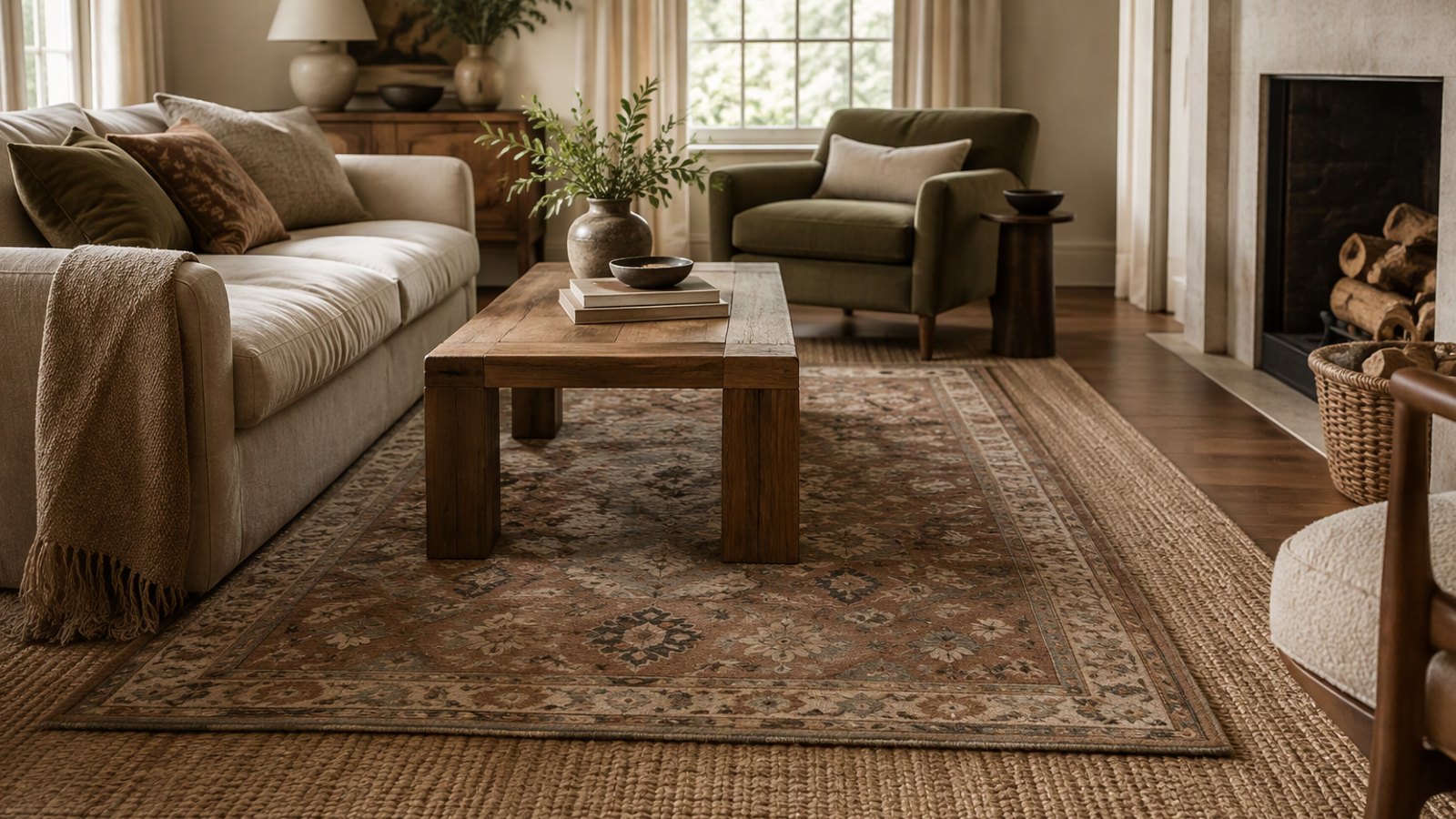
Layered Rugs by Seraj Rugs: Matched Pairs Woven to Fit

In short
- We weave both the base and the hand-knotted top in-house, so partners commission one matched pair rather than hunting for two rugs that happen to work.
- The base is woven flat and wide, in a flatweave, kilim, dhurrie or jute construction; the top carries the knot count and the pattern.
- We size the base to frame the top with an even 8 to 14 inch border, to your room and furniture plan.
- Every pair starts with a strike-off of both pieces, approved in your wool and palette before weaving begins.

Why we weave the pair as one commission
Most layered rug sets are two separate purchases that happen to sit well together. We weave both halves on our own looms, so the base and the top are planned as one order from the start, in the same palette and a compatible wool, with the base sized to frame the exact top you choose or have us weave. That removes the usual guesswork of pairing two ready-made rugs and lets us match color and construction with intent rather than luck.
The base does the sizing work. A good base is wide, flat and calm: a flatweave, kilim or dhurrie, or a natural fiber like jute, woven to sit nearly flush with the floor. We size it so it reads as a frame, with 8 to 14 inches of base showing on every side of the top piece. The top is where the craft shows: a hand-knotted rug with a defined pattern or a richer pile earns its place, because the base gives it a quiet ground to sit against.
How we weave a layered pair
Every layered commission runs the same way, so there are no surprises once weaving starts.
- You send the room, the furniture plan and the look you want for both pieces.
- We return a strike-off for the base and the top, each woven in your wool and palette, for sign-off.
- Once you approve both, we weave the pair on our own looms in Nepal or India.
- We inspect, wash, finish and ship the two pieces together, sized and matched as approved.
Because we weave both pieces, your layered pair does not depend on finding a second rug that happens to fit. The strike-off you approve sets the standard for both.
Constructions we weave for a layered pair
A pairing is really a choice between constructions. These are the combinations we weave most often.
Hand-knotted top over a wide flatweave base
The classic pairing. We weave a large flat base and size a hand-knotted top to sit inside it, so the base reads as the floor and the knotted rug reads as the object. Pieces such as Azure or Quartz work well in this role.
A base sized to a whole seating zone
For an open-plan room, we weave a base wide enough to span the seating footprint, with a smaller knotted rug sized to sit under the coffee table at its center.
A base cut for an angled top
Where the top rug will sit turned a few degrees off square, we keep the base square to the walls, so the angle reads as a choice rather than a slipped rug. A bolder piece, such as Blueprint or Geoflux, tends to carry an angled placement best; our geometric rugs guide covers reading pattern at an angle.
A close-fitted border
For rooms where floor space is tight, we size the base only slightly larger than the top, so it shows as a tight, even band rather than a wide frame.
Low-pile base, high-pile top
We can weave a thin flat base under a plush knotted rug, such as Terraknot, for a soft step and a clear edge, or keep both pieces closer in height for a quieter pairing.
Plain base, patterned top, or the reverse
We weave the base in a plain, tonal colorway, close to a piece like Grayscale, to let a patterned top carry the room, or the reverse: a low-contrast textured top over a solid base.
Matched runners for a hallway
In a corridor, we weave a narrower hand-knotted runner sized to sit inside a wider flat runner, adding warmth to a hard floor and protecting the path that takes the most feet.
What to confirm before you commission a layered pair
A short checklist worth running before you order a layered set from anyone.
A strike-off of both pieces
Insist on approved woven samples of the base and the top before production. Color on a screen is not color in wool, on either piece.
Matched wool and palette
Ask whether the base and top are dyed and woven to the same brief, not sourced separately and hoped to match.
A base sized to the top
The base should be woven to frame the specific top you have chosen, not picked from a stock size and trimmed to fit.
Who holds the loom
Commissioning from the manufacturer means the pair you approve is the pair that ships, with no handoff between two separate suppliers.
Start with a strike-off
Request a Layered Strike-Off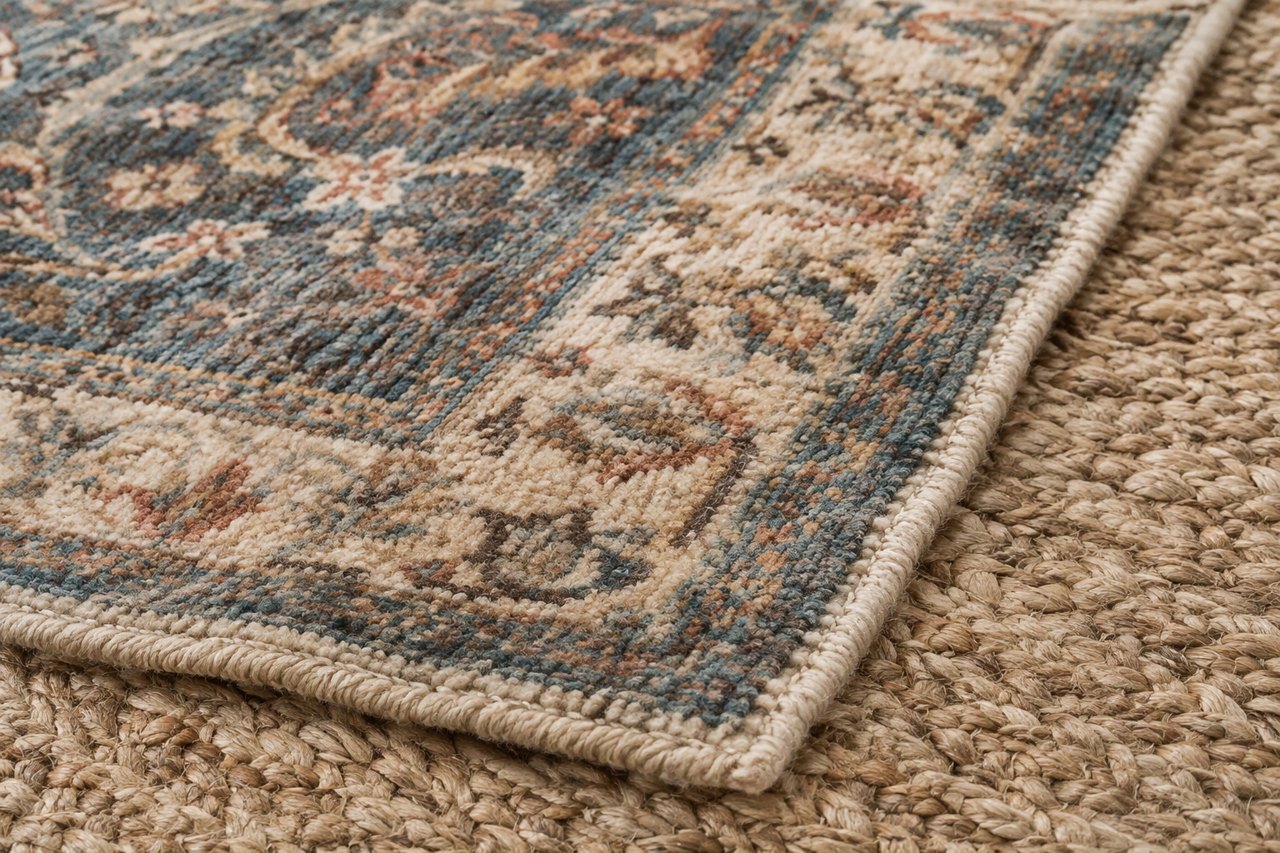
Capacity for layered programs
With roughly 200 looms and 500 weavers across Nepal and India, we weave a flat base and a hand-knotted top side by side, and can route repeat layered sets across a collection or a hospitality program without losing the match from piece to piece.
Because we make rugs rather than only sell them, we think about the pairing as one commission, not two separate buys. Partners who plan a layered look with us can match the base and the top from the same palette and the same wool, so the colors sit together instead of nearly matching. We can weave a plain flatweave base to the exact size that frames an existing or new knotted top, which removes the usual guesswork of hunting for two rugs that happen to work. If the sizes you need fall between the usual dimensions, our standard rug sizes guide shows where a custom size earns its place. You can see the base and top constructions side by side in the shop.
What to avoid in a layered pair
Most problems with layered rugs come down to a handful of avoidable choices, which is also why we weave the pair together rather than leave it to chance.
- A base that is too small. If the lower rug barely shows, the pairing looks like one rug sitting on another by accident. We size the base to leave a clear, even border.
- Two thick rugs. Stacking two high piles gives an unstable, lumpy surface. We keep at least one of the pair flat.
- Matching too closely. If the two rugs share height, color and pattern, there is no reason for there to be two. We build in one clear point of difference.
- Ignoring the edges. A top rug whose edge curls is a trip hazard. A thin pad or a flat, well-finished selvedge keeps corners down.
Layering by room
The same rules bend a little by room, and we weave each pairing to it.
| Room | Base rug | Top rug | Why it works |
|---|---|---|---|
| Living room | Wide flatweave or jute | Hand-knotted, patterned or plush | Anchors the seating group and adds a soft center |
| Bedroom | Large flat base under the bed | Smaller knotted rug at the foot | Warm step out of bed without covering the base |
| Open plan | Flat base across the zone | Knotted rug under the coffee table | Marks a room within a room |
| Hallway | Flat runner | Narrower knotted runner | Protects the busiest path and softens a hard floor |
Whatever the room, the base does the sizing work and the top does the styling. We weave the base to fit first, and the rest follows.
Frequently asked questions
What does layering rugs mean?+
How do you size a layered pair so it looks deliberate and not random?+
How do I keep a layered rug from slipping?+
Can you weave a hand-knotted top for any flatweave base?+
What size should the top and bottom rug be?+
What is a strike-off, and does it cover both rugs in a layered pair?+
Can Seraj make both rugs for a layered pair?+
Explore more from Seraj Rugs
Start with a strike-off
Send us the room, the furniture plan and the look you want for both pieces, and we will weave a strike-off of the base and the top in your palette before anything goes into production.
Request a Layered Strike-Off