Nepalese vs Indian Rugs: Key Differences, Explained by a Maker
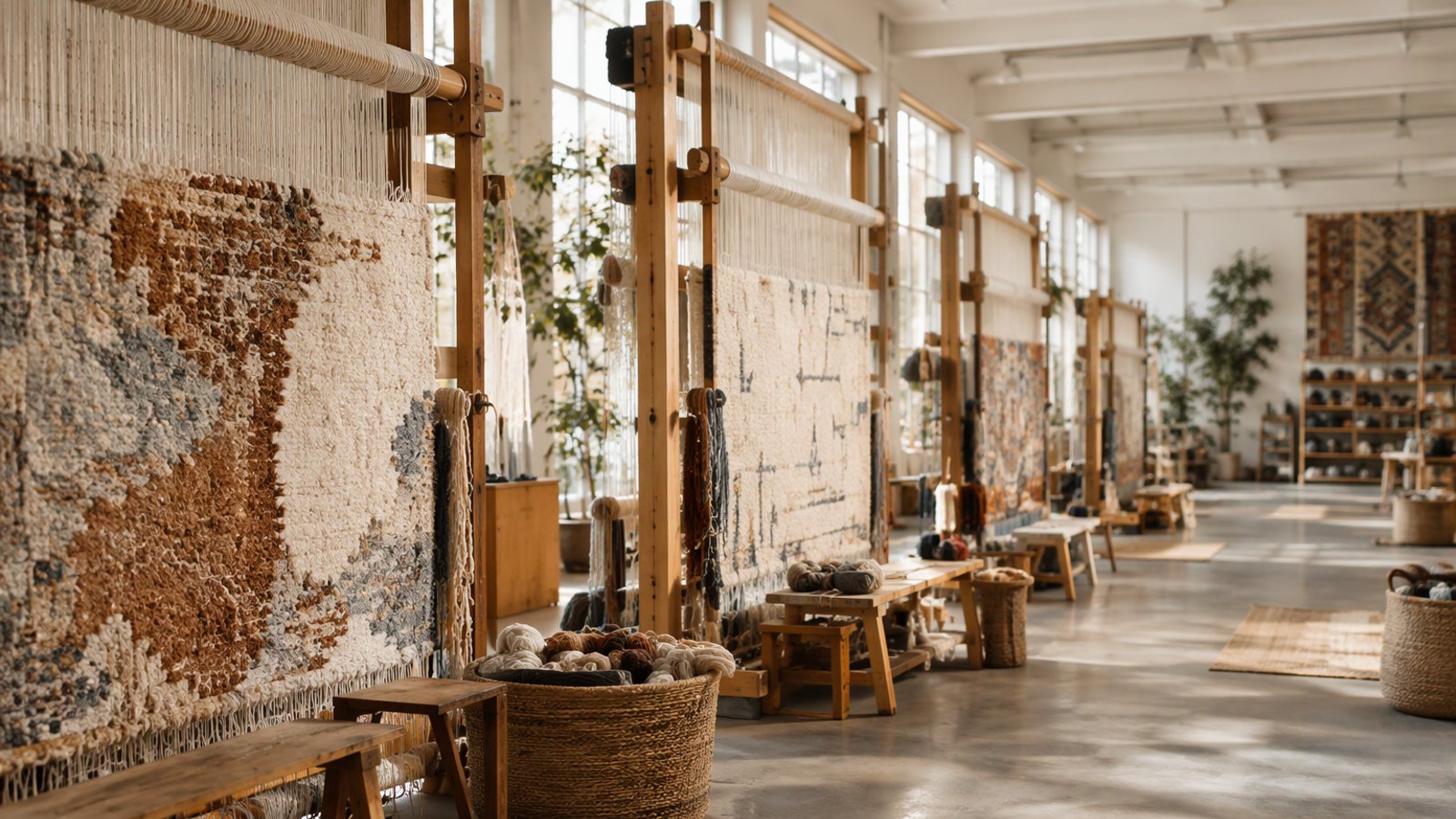
Nepalese vs Indian Rugs: The Real Differences, from the Maker
Nepalese and Indian rugs are often talked about as if one were simply the better version of the other. They are not. The two countries built different weaving traditions, with different knots, different wool and different strengths, and the right choice depends on the rug you are making. We know because we weave on our own looms in both Nepal and India, and we route every piece to the loom that suits it.
This guide sets out the differences between Nepalese and Indian rugs plainly: the knot, the wool, the constructions, the design range and the scale. It also explains why working with a maker that owns looms in both countries gives trade partners a straighter answer than a supplier that only has one.

In short
- Nepalese rugs are known for the Tibetan knot, hand-spun highland wool and fine detail at high knot counts.
- Indian rugs are known for breadth: hand-knotted, hand-tufted and flatweave constructions, wide color programs and larger runs.
- Neither origin is better across the board. The right one depends on construction, design detail, volume and timeline.
- We own looms in both countries, so we recommend the origin that fits your rug, not the one we happen to have.
Nepalese vs Indian rugs at a glance
A starting guide, not a rule. Because we weave in both countries, many designs can be made in either; the table shows the natural home for each kind of rug.
| Factor | Nepalese rugs | Indian rugs |
|---|---|---|
| Weaving tradition | Tibetan-knot hand-knotting | A broad tradition across hand-knotted, hand-tufted and flatweave |
| Wool | Hand-spun, hand-carded highland wool | Broad wool options chosen by design |
| Strongest at | Fine detail, luster, modern and contemporary pieces | Construction breadth, wide color programs, scale |
| Typical design range | Modern, abstract, minimal and Tibetan-inspired | Traditional through transitional, plus tufted and flatwoven styles |
| Typical run | Precise, high-value hand-knotted rugs | Larger programs, repeat orders and mixed-construction orders |
Nepalese rugs: what defines them
Nepal is our home for fine hand-knotted work. The tradition there runs on the Tibetan knot and on hand-spun, hand-carded highland wool, and it holds the high knot counts that detailed designs depend on. When a rug lives or dies on the clarity of a fine pattern, the crispness of a curve, or a quiet modern field that cannot hide a flaw, Nepal is usually the answer.
Where Nepalese rugs lead
- Fine, high-density hand-knotted rugs where small design detail has to read clearly.
- Modern, contemporary and abstract pieces, including designer statement rugs.
- Highland wool for luster and spring, with silk worked in where a design wants extra sheen.
- Hand-knotted hospitality runs that have to hold one standard across every rug in the order.
We have proven the scale of this work too: in one recent run we completed 1,200 sq m of 100-knot rugs in three months. For the full story, read our guide to Nepal handmade rugs, browse the hand-knotted wool rugs and Tibetan rugs collections, or see how it looks in a piece like SN23.

Indian rugs: what defines them
India is where breadth and capacity open up. On our own Indian looms we make hand-knotted, hand-tufted and flatweave rugs, which lets one project carry several constructions without moving between unrelated suppliers. India also has a long tradition of classic and Persian-inspired design, so traditional and transitional patterns sit naturally on its looms.
Fine knotting is not confined to Nepal either. Our founder, Shahid Ali Shah, brought the Tibetan knot to India, so detailed hand-knotted work sits alongside the tufted and flatwoven ranges rather than being traded away for them.
Where Indian rugs lead
- Larger volume programs and repeat runs that need scheduled capacity.
- Hand-tufted rugs and flatweaves such as kilim and dhurrie, next to hand-knotted construction.
- Broad color programs and traditional through transitional patterns.
- Multi-construction orders handled by one accountable maker instead of a chain of traders.
See the range in our hand-tufted rugs collection, in a piece like Cavier, and read how kilim, dhurrie and flatweave rugs differ from a knotted pile. For traditional looks, our guide to Oushak vs Persian-style rugs is a good place to start.

The differences that matter when you buy
Beyond the table, five differences decide most real projects.
Knot and construction
Nepal is built around hand-knotting with the Tibetan knot. India covers hand-knotted, hand-tufted and flatweave. If your project is one construction, that alone can settle the question. If it mixes constructions, it usually points to both.
Wool and hand
Highland wool carries detail and springs back, which is what makes a fine knot count worth paying for. India offers a broader range of wool options, which we choose by design. Either way, we name the wool for you and show it in a strike-off.
Detail and density
The more a design rests on fine detail and subtle color, the more it points to Nepal and its highland wool. Broader patterns and wide color programs sit comfortably on the India loom.
Design range
Nepal leans modern, abstract and minimal; India leans classic, traditional and transitional, with strong tufted and flatwoven ranges. Our guides to abstract rugs and geometric rugs show the modern side, and Berber and Moroccan rugs show a different one.
Scale and repeat orders
Small, precise, high-value runs suit Nepal. Larger programs and repeat orders usually route to India, where we schedule bigger runs on capacity we control. Either way, a strike-off you approve is the standard the run is held to.
Not sure which country suits your rug?
Send Us the BriefWhy Seraj Rugs is a great choice for both
Most suppliers only have one country, which means their honest answer to "Nepal or India?" is whichever one they have. We own looms in both, so the answer is whichever one makes your rug well.
Weaving in both countries
Roughly 200 looms and about 500 weavers across Nepal and India, so capacity in each is ours, not bought in.
Routing by the rug, not the account
We place each piece by construction, design detail, volume and timeline, and tell you why.
Approved before we weave
A woven sample in your colors and quality, signed off before the full order, whichever country it is made in.
One order across both looms
A hand-knotted hero and a set of flatweaves can run as a single order, with one schedule and one set of approvals.
How we decide which country a project goes to
We route on four questions, in roughly this order.
- Construction. Fine hand-knotted leans Nepal. Hand-tufted and flatweave lean India. Mixed constructions often split across both.
- Design detail. Fine detail, density and subtle color point to Nepal. Broader patterns and wide color programs sit on the India loom.
- Volume. Small, precise runs suit Nepal. Larger programs and repeat orders usually route to India.
- Timeline. Lead time shifts with construction and country, so we weigh the deadline against the first three and flag early if a date pushes a piece one way.
No single factor overrides the rest. We read them together and place each rug where the result holds up.
How an order runs, whichever country it is made in
- You send a brief, a render or a design from our library, with sizes and the wear each rug has to take.
- We confirm the construction, say which country suits each piece and why, and tell you the real knot count.
- We return a strike-off, a woven sample in your colors and quality, for sign-off.
- Once you approve it, we schedule the runs on our own looms in Nepal, India or both.
- We inspect, wash, finish and ship, and hold the finished rugs to the sample you approved.
Import questions such as duties and classification sit apart from the design decision and can change, so verify current rates before you rely on them. We cover the context in our note for rug importers on Nepal LDC graduation. When you are ready to plan, start with custom size rugs or commercial rugs.
What to ask any maker about origin
A short checklist worth running before you commit a program to Nepal, India or both.
Who owns the looms
Ask whether the maker weaves in each country on its own looms, or buys in from third parties and labels the result.
A stated knot count
Ask for the real number on every hand-knotted piece, not a description of the pile in adjectives.
Named wool
Ask which wool is used and where it is from, since it shapes both the look and the wear.
A strike-off
Insist on an approved woven sample in your colors and quality before production, in whichever country it is made.
Pieces we weave across both looms
A few hand-knotted pieces from our collection. Each can be rewoven to your size, knot count and colorway, and routed to the loom that suits it.


Frequently asked questions
What is the difference between Nepalese and Indian rugs?+
Are Nepalese rugs better than Indian rugs?+
What is the Tibetan knot, and why does it matter?+
Can Indian looms also do Tibetan-knot work?+
How do you decide where to make a given rug?+
Can one order be split across Nepal and India?+
Why choose Seraj Rugs over a supplier with one country?+
Explore more from Seraj Rugs
Send the brief, we pick the loom
Tell us the design, sizes and wear for each piece. We will tell you whether it belongs in Nepal, India or both, and weave a strike-off for your approval before anything goes into production.
Send Us the Brief